Category: Economy

  • Nestlé Malaysia and JAKIM Reinforce Strategic Alliance to Elevate Global Halal Standards and Ecosystem

    Nestlé Malaysia and JAKIM Reinforce Strategic Alliance to Elevate Global Halal Standards and Ecosystem

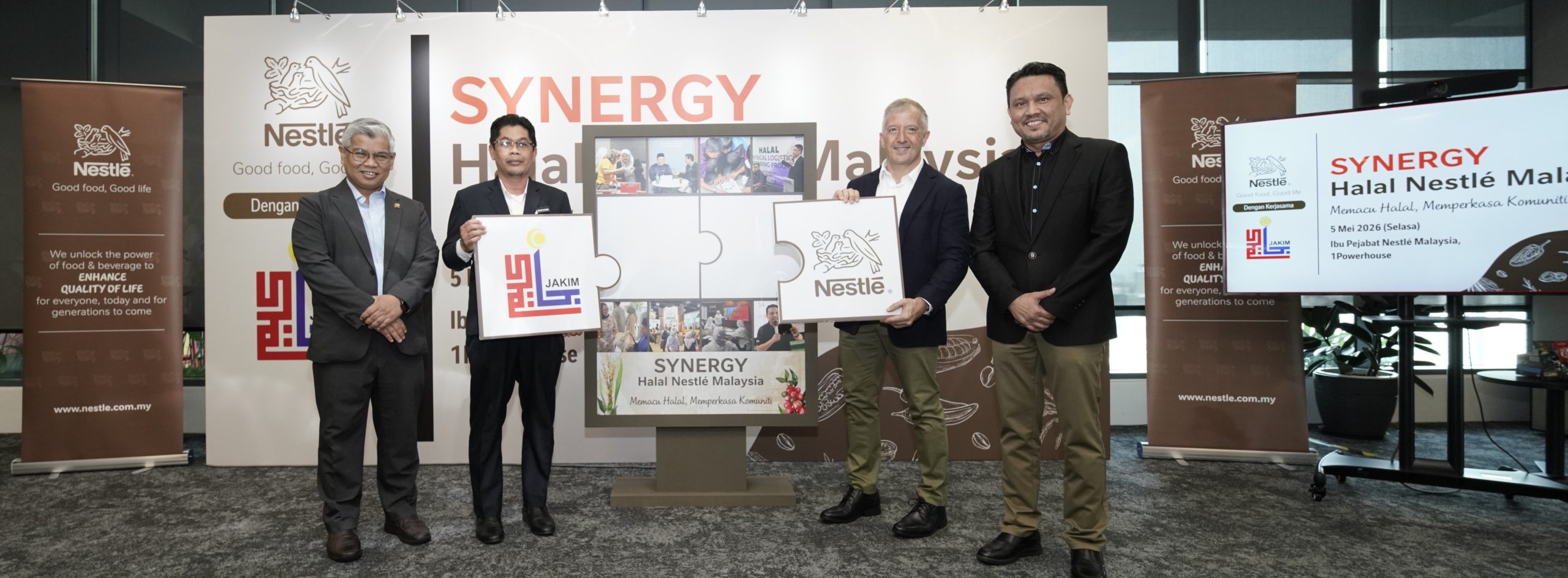
    Nestlé Malaysia and the Department of Islamic Development Malaysia (JAKIM) have reaffirmed their long-standing partnership through the SYNERGY (Strengthening Your Network and Ecosystem for Resilient Growth) initiative. Theed under the theme ‘Memacu Halal, Memperkasa Komuniti’, this collaboration highlights a shared commitment to fostering an inclusive, sustainable, and future-ready Halal industry while strengthening Malaysia’s status as a global leader in the sector. JAKIM has recognized Nestlé Malaysia’s comprehensive end-to-end Halal ecosystem, which has evolved since the company began pioneering Halal practices in the 1970s. As the Global Centre of Halal Excellence for the Nestlé Group, the Malaysian operations play a pivotal role in sharing local expertise across the company’s global network to build worldwide trust in Halal standards.

    The partnership emphasizes that a credible Halal ecosystem requires consistent cooperation between regulators and industry players to uphold rigorous standards. Nestlé Malaysia’s commitment extends across its entire value chain, from certified manufacturing facilities to grassroots community engagement. By working closely with JAKIM, the company aims to scale up efforts that empower youth, support local entrepreneurs, and strengthen the national supply chain. This industry-led contribution complements national efforts to multiply positive impacts and maintain Malaysia’s reputation as a leading global Halal hub.

    Education and talent development form a cornerstone of this holistic Halal strategy. The Halal@School program, in partnership with Universiti Sains Islam Malaysia (USIM), has introduced foundational Halal values to over 6,000 students across Peninsular Malaysia. Building on this, the Halal@STEM initiative launched in 2025 has engaged hundreds of secondary students to spark interest in science through a Halal lens, supported by the inaugural HalalSTEM Expo in Pahang. Additionally, the Nestlé Youngpreneurs Programme has provided 200 university students with practical business insights and Halal best practices.

    Nestlé Malaysia also focuses on building capability within the business community and supply chain. Since 2010, the SME Mentoring Programme has assisted more than 1,200 Micro, Small, and Medium Enterprises (MSMEs) in navigating the Halal certification process. More recently, the company introduced a pioneering Halal certification mentoring initiative specifically for third-party logistics providers in collaboration with JAKIM, engaging 27 companies to ensure strict compliance throughout the supply chain. Public awareness is further driven through a podcast series with the Institute of Islamic Understanding Malaysia (IKIM), which has reached hundreds of thousands of listeners nationwide. These collective efforts demonstrate that Halal has been internalized as a core organizational value, ensuring a resilient and scalable foundation for the future of Malaysia’s Halal economy.

  • Gandingan Teknokrat dan TPM: ANSARA Malaysia Penganjur Sesi Dialog ‘Unplugged’

    Gandingan Teknokrat dan TPM: ANSARA Malaysia Penganjur Sesi Dialog ‘Unplugged’

    ANSARA Malaysia kini kembali dengan impak besar melalui penganjuran Himpunan Gen MARA: Sesi Eksklusif Unplugged yang bakal mempertemukan golongan profesional dengan Timbalan Perdana Menteri, Dato’ Seri Dr. Ahmad Zahid bin Hamidi. Dijadualkan berlangsung pada 5 Mei 2026 di Dewan Merdeka, WTC KL, acara ini merupakan acara kemuncak sempena sambutan ulang tahun MARA yang ke-60. Program ini bukan sekadar perjumpaan biasa, malah ia menjadi medan pertemuan ‘otak-otak’ hebat—daripada teknokrat, pakar industri, hinggalah usahawan berjaya yang semuanya lahir daripada ekosistem MARA.

    Pengarah Program, Ts. Abdul Razak Abdul Khalid, menyifatkan “Gen MARA” sebagai aset strategik negara. Melalui Biro Profesional ANSARA, inisiatif ini diambil untuk memastikan jaringan kepakaran alumni tidak bergerak secara solo, sebaliknya bersatu untuk menyumbang semula kepada pembangunan negara. Format ‘Unplugged’ dipilih khusus bagi memberi ruang dialog yang lebih santai dan terus (direct) antara pemain industri dengan kepimpinan tertinggi negara, sekali gus membuktikan solidariti komuniti profesional terhadap agenda pemerkasaan Bumiputera.

    Menambah keterujaan, majlis ini turut menjadi saksi kepada pelancaran Skuad ANSARA, sebuah unit sukarelawan rasmi yang bakal menjadi tulang belakang kepada aktiviti kemanusiaan dan teknikal persatuan. Bukan itu sahaja, debaran kian terasa dengan pra-pelancaran Karnival Sukan ANSARA 2027. Temasya dwi-tahunan ini bukan sekadar tentang pingat, tetapi tentang menyemarakkan kembali semangat ukhuwah dan membuktikan bahawa ‘bonding’ antara alumni MARA merentas generasi tetap padu dan tidak pernah luntur.

    Secara keseluruhannya, ANSARA Malaysia komited untuk terus menjadi rakan strategik kerajaan. Dengan menghimpunkan ratusan pakar di bawah satu bumbung, program ini menjadi bukti nyata bahawa pelaburan MARA selama enam dekad telah menghasilkan modal insan kelas pertama yang sedia memacu Malaysia ke tahap yang lebih gemilang. Ini adalah masa untuk para profesional MARA tampil ke hadapan, berkongsi input kritikal, dan memastikan ekosistem MARA terus relevan mendepani cabaran masa hadapan.

    Berita baik buat semua—penyertaan bagi sesi hebat ini adalah PERCUMA! Jangan tunggu lagi, slot adalah terhad. Segera RSVP tempat anda di bit.ly/rsvpunpluggedtpm. Jika anda merancang untuk hadir bersama rakan sepasukan atau secara berkumpulan, anda boleh mendaftar secara manual melalui bit.ly/borangdaftar-unpluggedtpm dan hantarkan borang tersebut ke emel sekretariat@myansara.org sekarang.

  • Atlas Copco Group strengthens its presence in Malaysia with the launch of a new 120,000 sq ft integrated hub in Shah Alam, aimed at enhancing regional operations and supporting talent development.

    Atlas Copco Group has reinforced its long-term commitment to Malaysia with the official opening of its new headquarters and integrated facility in Alam Impian, Shah Alam. Spanning 120,000 sq ft, the hub represents an eight-figure investment and marks a significant milestone in the company’s expansion since establishing its presence in the country in 1982.

    Situated within Selangor’s key manufacturing corridor, the three-acre facility serves as a central hub for operations across Malaysia and Southeast Asia. It supports critical business functions, including a regional shared finance services centre, while also acting as a coordination point for operations in Kuantan, Penang and Johor. Its strategic location—close to Port Klang, major highways, Kuala Lumpur, and the upcoming LRT3 line—enhances logistics efficiency and service delivery for customers and partners across the region.

    Currently home to 273 employees, the facility is expected to create between 80 and 100 additional jobs over the next five years. This expansion aligns with Malaysia’s New Industrial Master Plan 2030 (NIMP 2030), which emphasises talent development, productivity growth, and the advancement of high-value industrial activities. The Malaysian Investment Development Authority (MIDA) continues to play a vital role in facilitating such investments, supporting companies that contribute to long-term industrial competitiveness and capability building.

    Beyond operational efficiency, the new facility is designed to foster a collaborative and modern working environment. In line with Atlas Copco Group’s ESG commitments, the building incorporates sustainability-focused features aimed at improving energy efficiency and supporting long-term, responsible operations. Enhanced access to public transportation is also expected to improve talent attraction and retention across the Klang Valley.

    The launch event brought together representatives from government, industry, and the diplomatic community, including the Embassy of Sweden in Malaysia. Their presence highlights the strong bilateral ties between Malaysia and Sweden, particularly in advancing industrial innovation and sustainable development. Atlas Copco’s continued investment underscores Malaysia’s growing importance as a regional hub for advanced industrial and service operations.

    The opening of this integrated hub not only strengthens Atlas Copco Group’s regional capabilities but also contributes to Malaysia’s broader industrial ecosystem. With a focus on innovation, efficiency, and talent development, the investment is poised to support sustainable economic growth and reinforce the country’s position as a key player in Southeast Asia’s industrial landscape.

  • Trust as the Foundation of Malaysia’s Digital Payments GrowthBy Tee Kean Kang, Chief Executive Officer of Paydibs

    Trust as the Foundation of Malaysia’s Digital Payments GrowthBy Tee Kean Kang, Chief Executive Officer of Paydibs

    Malaysia’s digital payments ecosystem continues to expand at an unprecedented pace, yet scale alone does not equate to strength. In 2025, the country recorded 18.4 billion e-payment transactions, reflecting a 25 per cent year-on-year increase, with Malaysians conducting an average of 538 digital transactions each. DuitNow QR volumes have also doubled to three billion, supported by nearly three million merchant touchpoints across the country.

    While these figures demonstrate strong adoption, they also raise a more pressing question for the industry: whether trust is keeping pace as digital transactions become increasingly embedded in daily life. Reported fraud losses reached RM2.2 billion in 2025, highlighting the growing risks within an increasingly digital ecosystem. In the first quarter of the year alone, online fraud cases rose to 12,110, with total losses amounting to RM573 million. Although digital payments continue to grow rapidly, these figures reflect a parallel reality in which confidence in the system is being tested in real time. This marks an important inflection point, where the focus must now shift from driving adoption at scale to strengthening trust and assurance at every stage of the transaction journey.

    Trust in payments is often discussed in broad terms, but for businesses on the ground it is built on three core elements: visibility, control, and protection. Visibility allows merchants to track the status of transactions in real time, while control provides certainty over fund settlements, enabling better cash flow management. Protection offers reassurance that businesses are safeguarded when unexpected issues arise. When any of these elements is weakened, trust can quickly deteriorate, especially for smaller businesses operating with limited margins.

    In practice, most payment issues do not occur at scale but at the edges of the system, where processes are fragmented and operational gaps are more likely to appear. For micro, small and medium enterprises (MSMEs), a delayed settlement or disputed transaction is not a minor disruption but one that directly affects daily operations.

    Bank Negara Malaysia has already acknowledged this shift in focus. The priority is no longer solely on expanding digital payments, but also on preserving trust within the ecosystem. Frameworks such as the Shared Electronic Fraud and Theft policy promote shared accountability between financial institutions and users, while infrastructure enhancements such as RENTAS+ and the adoption of ISO 20022 standards improve transparency and system resilience. However, regulation alone is not sufficient to build trust; it must be reinforced through consistent, real-world experiences at the merchant level.

    Malaysia’s 1.2 million MSMEs sit at the centre of this transition. Unlike large enterprises, they often lack extensive financial systems or dedicated risk management teams. Their exposure is immediate, and their tolerance for disruption is low. For these businesses, trust is not defined by policy or technical standards, but by whether payments are received as expected, whether transactions are transparent, and whether digitalisation simplifies rather than complicates operations. This is where the industry must move beyond enabling access and focus on delivering assurance.

    From an operational standpoint, addressing this gap requires rethinking the purpose of payment infrastructure. Direct connectivity to national payment rails is not merely a technical improvement. It removes intermediary layers, enabling faster access to funds and greater visibility over cash flow. This is not just about speed, but about certainty, which is essential for business stability.

    Similarly, consolidating multiple payment methods into a single platform or device goes beyond convenience. It reduces fragmentation, minimises operational risk, and ensures consistency in transaction outcomes. Unified terminals that support QR, card, and alternative payment methods within a single controlled environment reflect this approach. These are deliberate design choices aligned with how merchants operate, rather than how payment systems have traditionally been structured.

    Trust must also extend beyond transactions to address broader business risks. Many MSMEs remain underinsured, often due to the complexity or perceived disconnect between traditional insurance products and daily operations. Embedding protection directly into payment infrastructure provides a more practical solution, where coverage such as business interruption, liability, and asset protection becomes part of the tools merchants already use. By integrating these safeguards into the payment experience, barriers to adoption are reduced while businesses are better protected against unforeseen disruptions. This reflects a broader shift in fintech, where value is created not only through functionality, but through relevance and integration into real business needs.

    Paydibs, for instance, has partnered with Great Eastern General Insurance to embed business protection directly into its payment terminals. Coverage for fire and flood damage, cash-in-transit loss, employer liability, and business disruption is bundled with the terminal merchants already use to accept digital payments. The principle is clear: businesses should not have to choose between digital growth and operational protection, as both should be inherently built in.

    Eighteen billion transactions in a single year is a significant milestone, and Malaysia has clearly demonstrated its ability to achieve digital payment scale. Bank Negara Malaysia’s priorities for 2026, which emphasise stronger fraud prevention, cross-sector collaboration, and inclusive adoption, further reinforce trust as a foundational pillar for continued progress.

    In this environment, differentiation will no longer be defined by transaction volume or processing speed alone. It will be shaped by the ability to deliver systems that are resilient, transparent, and purpose-built to support businesses through both growth and uncertainty. Digitalisation accelerates when businesses have confidence in the systems they rely on, and that confidence is earned through consistent performance, clear visibility, and meaningful protection.

  • Supporting Local Farmers: MAGGI Chilli Sauce Now Made Exclusively with 100% Malaysian-Grown Chillies

    Supporting Local Farmers: MAGGI Chilli Sauce Now Made Exclusively with 100% Malaysian-Grown Chillies

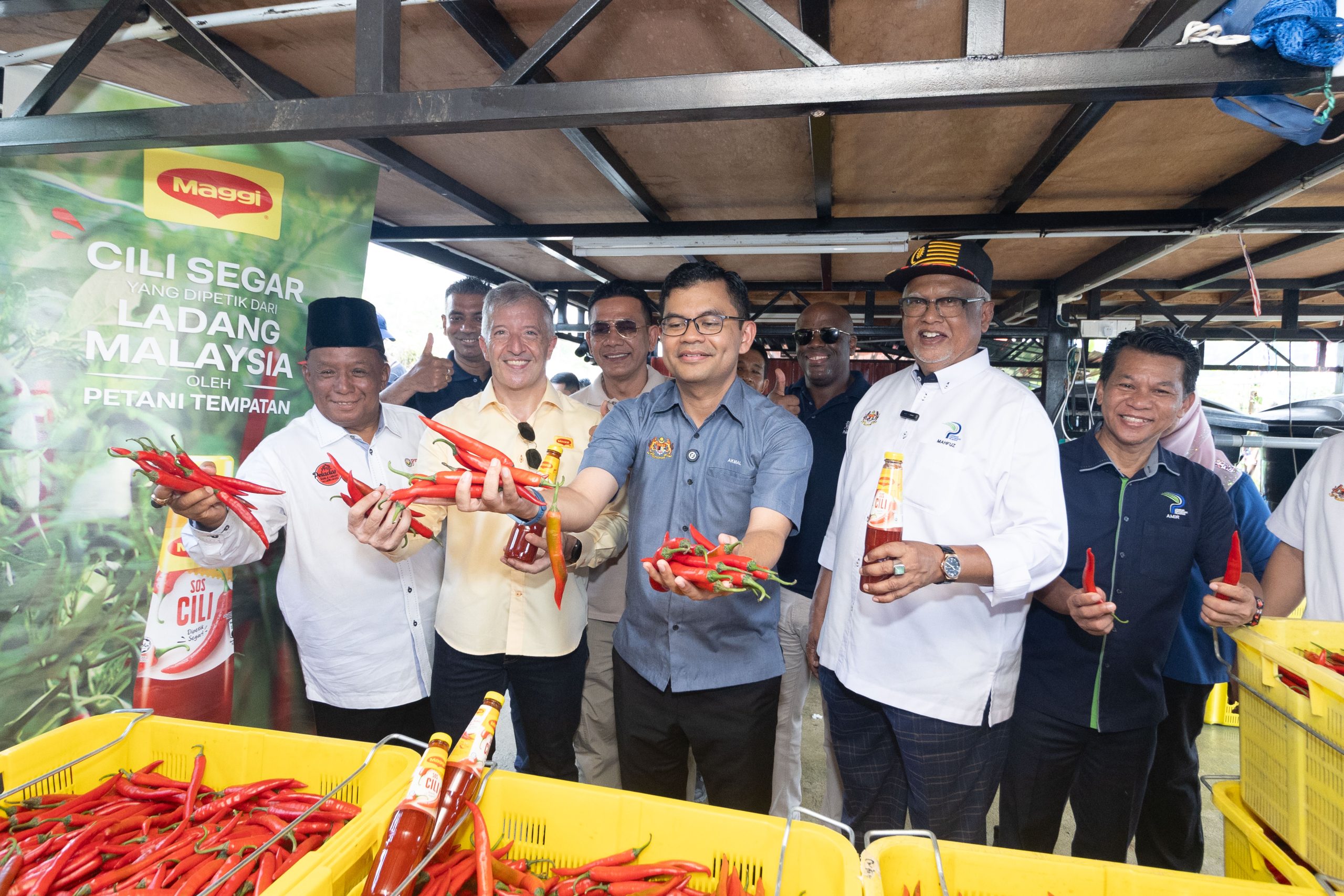
    YB Tuan Haji Akmal Nasrullah Bin Haji Mohd Nasir, Minister of Economy, today conducted an official working visit to the IPRINTAN Putrajaya Project to witness the progress of the national food security initiative spearheaded by Nestlé Malaysia. The visit highlighted the success of structured farmer partnerships in enhancing national food self-sufficiency while providing sustainable economic opportunities for the B40 community.

    During the visit, the Minister was briefed on the significant socio-economic impact of the high-yield chilli farming initiative. The project, which is integrated into Nestlé Malaysia’s local supply chain, has demonstrated substantial improvements in farmer productivity and income levels. This collaboration is a key component of the Nestlé Chilli Club (NCC), a long-standing contract farming programme established in 1995.

    Strengthening the National Food Supply Chain

    The contract farming initiative currently supports local farmers across 12 sites in Kelantan, Selangor, Putrajaya, and Johor, covering a total of 146 acres. This strategic programme provides farmers with income security, professional skills development, and stable market demand.

    A major milestone was announced during the visit: the Nestlé Chilli Club now fulfills 100% of the fresh chilli requirements for the locally produced MAGGI Chilli Sauce. This achievement reinforces Nestlé Malaysia’s commitment to sustainable, locally sourced food production and the reduction of reliance on imports.

    Economic Empowerment for B40 Smallholders

    Data from the IPRINTAN Putrajaya project indicates that participating farmers earn an average monthly income of approximately RM3,000. Currently in its fifth cycle (2026), the project has successfully produced more than 200 tonnes of chillies, with an estimated market value of RM1.5 million.

    Mr. Juan Aranols, Chief Executive Officer of Nestlé Malaysia, stated:

    “Supporting the livelihoods of local farmers is integral to both our value chain and the nation’s food security agenda. Our long-term partnerships with farming communities and government stakeholders, including our collaboration with IPRINTAN under the Ministry, reflect our shared responsibility to build a more resilient food system while empowering B40 households.”

    Investment in Regenerative Agriculture

    To ensure the long-term viability of the farms, Nestlé Malaysia provides participants with intensive training in regenerative agricultural practices. These eco-friendly techniques enhance soil health and farm productivity, ensuring high-quality, traceable produce for Nestlé’s manufacturing value chain.

    The initiative has seen consistent growth since its inception in Kelantan in 1995. It expanded to Selangor in 2021 with the support of Pertubuhan Peladang Kawasan Kuala Langat and further evolved in 2025 with a modern greenhouse project in collaboration with Chin Siam Chiap (CSS) Johor.

    The ‘Farmer Connect’ Legacy

    Nestlé Malaysia’s commitment to economic resilience is further anchored in its broader Farmer Connect programmes. These initiatives support hundreds of farmers nationwide across various sectors:

    • Rice: Sustainable cultivation and agronomy support in Kedah and Perlis.
    • Cocoa: Responsible sourcing in partnership with the Malaysian Cocoa Board in Sabah and Sarawak.
    • Coffee: Capacity building and farming programmes in Kedah and Gua Musang, Kelantan.

    Guided by its Creating Shared Value (CSV) approach, Nestlé Malaysia remains dedicated to building a sustainable food future by strengthening local sourcing and fostering resilient supply chains.