Category: Aviation

  • Emirates Marks Best Financial Performance in Its History

    Emirates Marks Best Financial Performance in Its History


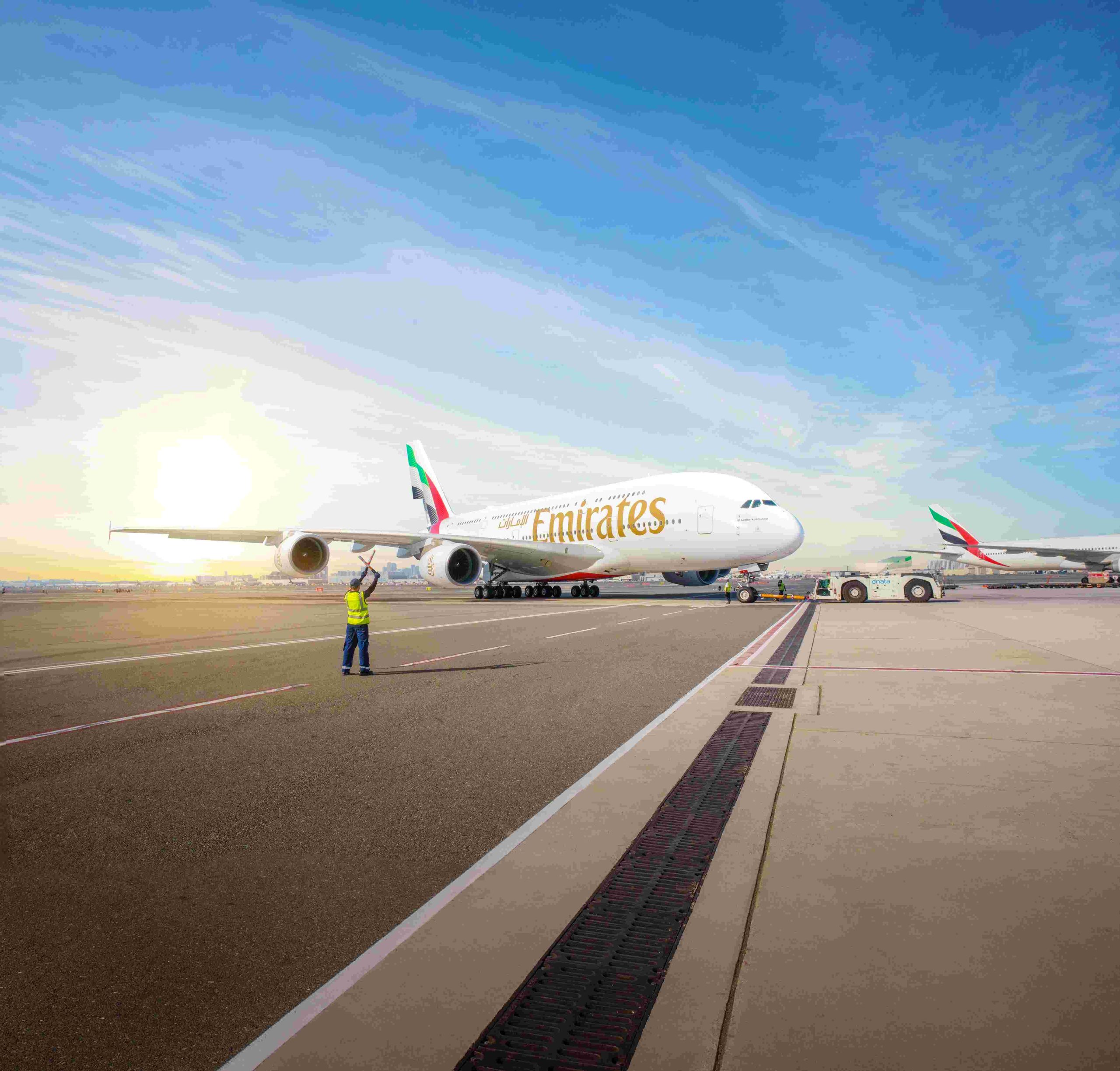
    Emirates Group recorded its highest-ever profit for the 2025-26 financial year, posting a pre-tax profit of AED24.4 billion (US$6.6 billion), an increase of seven per cent compared to the previous year. The Group also achieved record revenue of AED150.5 billion (US$41 billion) despite facing operational disruptions across the Gulf region during the reporting period.

    Emirates maintained its position as the world’s most profitable airline, reporting a pre-tax profit of AED22.8 billion (US$6.2 billion), up seven per cent year-on-year. The strong performance was driven by network expansion and the addition of new Airbus A350 aircraft equipped with the airline’s latest products and technologies.

    Meanwhile, dnata also delivered an impressive performance, recording its highest-ever revenue of AED23.6 billion (US$6.4 billion) alongside steady profit growth, supported by increased airport operations, catering and travel services activities.

    For the financial year ended 31 March 2026, Emirates Group also reported record cash assets of AED59.6 billion (US$16.2 billion), reflecting a 12 per cent increase compared to the previous year. The Group’s EBITDA reached AED41.1 billion (US$11.2 billion), highlighting strong operating profitability.

    The Group declared a dividend of AED3.5 billion (US$1 billion) to its owner, the Investment Corporation of Dubai (ICD). Following the increase in the UAE corporate tax rate from nine to 15 per cent due to the implementation of Pillar Two tax regulations, Emirates Group posted a profit after tax of AED21 billion (US$5.7 billion), up three per cent from the 2024-25 financial year.

    Chairman and Chief Executive of Emirates Airline and Group, Sheikh Ahmed bin Saeed Al Maktoum, said the outstanding results demonstrated the resilience of Emirates Group’s business model, which is built on safety, innovation, service excellence, strong talent and strategic partnerships.

    He noted that during the first 11 months of the 2025-26 financial year, demand for Emirates and dnata products and services remained robust, contributing to higher revenue and healthy profit margins driven by continuous investments in products, technology, branding and people development.

    However, military activities in the Gulf region on 28 February significantly disrupted global commercial aviation operations, including in the UAE. Emirates and dnata responded swiftly by implementing measures to support affected customers and employees while ensuring operational continuity.

    Sheikh Ahmed said Dubai’s position as a global aviation hub, supported by modern infrastructure and a strong aviation ecosystem, enabled UAE authorities to act quickly in securing safe commercial flight corridors. Operations at Dubai International Airport (DXB) have since gradually recovered, although passenger capacity has yet to fully return to pre-disruption levels.

    He also highlighted the important role played by Emirates Group employees in ensuring the organisation remained agile and operationally efficient during challenging times. Sheikh Ahmed further expressed appreciation for Dubai’s leadership and its continued support for the aviation sector as a key driver of the emirate’s economy.

    Throughout the 2025-26 financial year, Emirates Group invested AED17.9 billion (US$4.9 billion) in new aircraft, facilities, equipment and advanced technologies to support future growth. The Group’s workforce also expanded by eight per cent to 130,919 employees, including a growing UAE national workforce which now exceeds 4,000 employees.

    Commenting on the outlook for 2026-27, Sheikh Ahmed said Emirates Group is entering the new financial year with a very strong cash position and solid business fundamentals. He added that the Group would continue its aircraft delivery and cabin retrofit programmes while maintaining investments in new facilities and world-class customer experiences.

    During the year, Emirates expanded its network with four new destinations: Da Nang, Hangzhou, Siem Reap and Shenzhen. As of 31 March 2026, Emirates’ global network covered 152 cities across 80 countries. The airline also strengthened its strategic partnerships with 32 codeshare partners and 117 interline partners, providing customers access to more than 1,700 cities worldwide.

    Emirates received 15 new Airbus A350 aircraft during the financial year, enabling the airline to offer more premium products, including Premium Economy Class and next-generation inflight entertainment systems. By the end of March 2026, Emirates operated a fleet of 277 aircraft with an average fleet age of 10.8 years.

    Emirates’ revenue increased by two per cent to AED130.9 billion (US$35.7 billion), while profit after tax reached a record AED19.7 billion (US$5.4 billion). The airline carried 53.2 million passengers during the financial year, recording a passenger seat factor of 78.4 per cent.

    As part of efforts to enhance customer experience, Emirates introduced high-speed Starlink internet connectivity across its aircraft and continued its US$5 billion cabin retrofit programme. To date, 91 aircraft have completed the full refurbishment process.

    Emirates SkyCargo also delivered strong performance, handling 2.4 million tonnes of cargo, up three per cent from the previous year. The cargo division generated AED16.2 billion (US$4.4 billion) in revenue, contributing 12 per cent to Emirates’ total revenue.

    In addition, dnata continued to strengthen its global operations as revenue increased by 12 per cent to AED23.6 billion (US$6.4 billion). The growth was driven by increased aviation and travel activities across key markets including Australia, Europe, the UAE, the United Kingdom and the United States.

    dnata also invested AED858 million (US$234 million) to expand catering facilities, cargo operations and environmentally friendly ground support equipment. The company continued implementing sustainability initiatives, including the use of sustainable aviation fuel (SAF), food waste reduction programmes and the adoption of electric and hybrid vehicles in its operations.

    On the social responsibility front, Emirates Group continued supporting community programmes through the Emirates Airline Foundation and the dnata4good platform, including initiatives focused on education, healthcare and welfare assistance for underprivileged communities worldwide.
    :::

  • Chongqing Airlines Launches Direct Chongqing–Kota Kinabalu Route

    Chongqing Airlines Launches Direct Chongqing–Kota Kinabalu Route

    Tourism Malaysia welcomed the arrival of the inaugural direct service by Chongqing Airlines connecting Chongqing Jiangbei International Airport and Kota Kinabalu International Airport on 19 March 2026, marking an important milestone in strengthening air connectivity between China and Sabah.

    The new flight OQ2193 links Chongqing with Kota Kinabalu using the modern Airbus A320neo, carrying up to 195 passengers per trip. The service operates three times weekly on Tuesdays, Thursdays and Saturdays, departing China at 19:00 and arriving in Malaysia at an estimated time of 23:15. This further enhances accessibility from China, one of Malaysia’s most important tourism source markets, while supporting sustained growth in visitor arrivals.

    The launch of this new airline service reflects the growing interest among Chinese carriers in expanding routes to Sabah, driven by rising demand for the state’s diverse tourism offerings. The route strengthens connectivity for travellers from Western China, providing greater access to Sabah’s renowned landscapes, vibrant culture and signature Malaysian hospitality. In total, 10 cities in China are connected to Sabah through key entry points such as Kota Kinabalu International Airport and Tawau Airport, with 112 weekly flights currently in operation.

    “This route launch reflects the soaring demand for Sabah’s unique offerings. As a key pillar of our China strategy, this partnership with Chongqing Airlines strengthens Malaysia’s position as a premier and accessible gateway for nature, culture and world-class hospitality, while driving inbound travel from China as part of the Visit Malaysia 2026 (VM2026) campaign,” said Mr Mohd Amirul Rizal Abdul Rahim, Director General of Tourism Malaysia.

    The inaugural arrival was received by delegates from Tourism Malaysia, led by Ms Haryanty Abu Bakar, Director of Tourism Malaysia Sabah, alongside representatives from the Sabah Tourism Board, Chongqing Airlines and Malaysia Airports Holdings Berhad in a welcoming ceremony to commemorate the milestone.

    The new Chongqing–Kota Kinabalu route reflects continued collaboration between tourism authorities, airport operators and airline partners to strengthen Malaysia’s air connectivity and support sustainable tourism growth. The direct service offers seamless travel options for leisure travellers, business visitors and group tours, while enhancing Kota Kinabalu’s position as a strategic gateway to East Malaysia.

    China remains a key market in Malaysia’s tourism expansion. In 2025, Malaysia recorded 4.7 million visitor arrivals from China, representing a 25.1 per cent year-on-year increase and underscoring the market’s continued importance and strong travel demand.

    Aligned with the strategic objectives of Visit Malaysia 2026 (VM2026), the introduction of this route enhances international accessibility and further strengthens Kota Kinabalu as a key regional gateway alongside Kuala Lumpur. It is expected to encourage repeat visits, increase tourism spending and reinforce Malaysia’s position as a preferred destination for leisure, culture, gastronomy and shopping.

    Tourism Malaysia extends its appreciation to Chongqing Airlines and Malaysia Airports Holdings Berhad for their continued collaboration and support, and looks forward to working closely on joint promotional initiatives to showcase Malaysia’s diverse tourism offerings to travellers from Chongqing and the wider China market in support of Visit Malaysia 2026 (VM2026).

  • Malaysia Welcomes Juneyao Airlines’ Inaugural Wuxi-KL Route

    Malaysia Welcomes Juneyao Airlines’ Inaugural Wuxi-KL Route

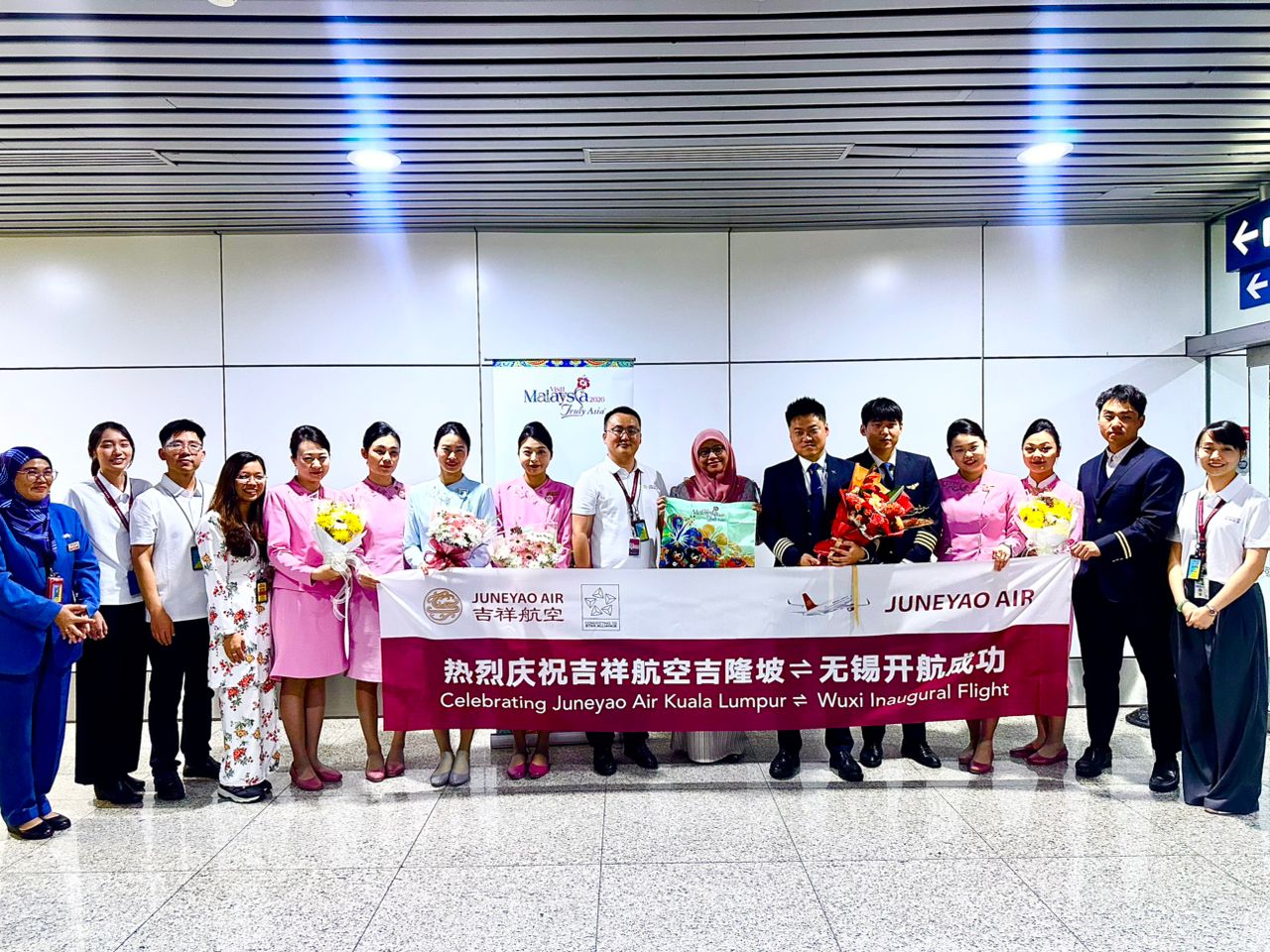
    Tourism Malaysia welcomes the inaugural direct flight by Juneyao Airlines connecting Sunan Shuofang International Airport in Wuxi to Kuala Lumpur International Airport (KLIA) on 20 March 2026, marking another important milestone in strengthening air connectivity between Malaysia and emerging cities in China.

    Operating with a modern Airbus A320neo, the new HO1563 flight links Wuxi and Kuala Lumpur with three weekly services on Tuesday, Thursday, and Saturday. Starting on 19 March 2026, the flight departs Wuxi at 22:55 and arrives in Kuala Lumpur at approximately 02:50.

    This new route represents Juneyao Airlines’ continued expansion in Malaysia beyond its established Shanghai network, further enhancing connectivity between the two countries. The service also improves access for travellers connecting through Kuala Lumpur to other Malaysian destinations such as Tawau and Penang. As of February 2026, China is connected to Malaysia through 30 cities, with major airports including KLIA, Penang International Airport, and Kota Kinabalu International Airport operating a total of 871 flights weekly.

    “The launch of this direct service between Wuxi and Kuala Lumpur reflects the growing momentum in Malaysia–China tourism connectivity. This route not only strengthens air links between the two countries but also opens the door for more travellers from Wuxi and nearby regions to explore Malaysia’s unique charm, rich culture, and diverse travel experiences,” said Mr. Mohd Amirul Rizal Abdul Rahim, Director General of Tourism Malaysia.

    Passengers on the inaugural flight were given a warm farewell at a special send-off ceremony at Sunan Shuofang International Airport, led by Mr. Aaron Gan, Director of Tourism Malaysia Shanghai, together with representatives from Juneyao Airlines. Upon arrival in Malaysia, they were welcomed by Ms. Noriah Jaafar, Senior Deputy Director of Tourism Malaysia, along with Juneyao Airlines representatives.

    China continues to be one of Malaysia’s most important source markets. In 2025, Malaysia welcomed 4.7 million visitors from China, reflecting a 25.1 per cent year-on-year increase and demonstrating the market’s strong recovery and sustained travel demand. With direct connectivity now in place, leisure tourists, business visitors, and organised tour groups can enjoy more convenient access, reinforcing Kuala Lumpur’s role as a key aviation and tourism gateway.

    The launch of this scheduled service aligns with the strategic goals of Visit Malaysia 2026 (VM2026), expanding international access and strengthening Kuala Lumpur’s position as a regional hub. Improved air connectivity is expected to encourage repeat visits, boost tourism expenditure, and further highlight Malaysia as a destination renowned for its vibrant culture, world-class cuisine, diverse shopping, and unique travel experiences.

    Tourism Malaysia also expresses its appreciation to Juneyao Airlines for its continued partnership and support, and looks forward to deepening this collaboration through joint promotional efforts to showcase Malaysia’s diverse attractions to travellers from Wuxi and across China in support of Visit Malaysia 2026 (VM2026).

  • Batik Air Strengthens Penang as Its Northern Hub, Introduces New Routes to Singapore and Medan

    Batik Air Strengthens Penang as Its Northern Hub, Introduces New Routes to Singapore and Medan

    Batik Air has expanded its regional footprint with the launch of two new routes from Penang International Airport (PEN) to Singapore (SIN) and Kualanamu, Medan (KNO). The introduction of these services marks a significant step in positioning Penang as a northern aviation hub, offering enhanced connectivity for international travellers and supporting the state’s tourism, business, and medical travel sectors.

    The new Penang–Singapore route complements rising demand from Malaysia’s largest international visitor market. Between January and August 2025 alone, Malaysia welcomed 14.0 million Singaporean travellers—an 18.1% increase from the previous year. The direct connection is expected to further drive short-haul leisure travel, weekend trips, corporate mobility, and family travel, enabling visitors from Singapore to easily explore Penang’s rich cultural heritage, celebrated street food, and diverse attractions.

    The arrival of passengers on flight OD832 was welcomed by YB Wong Hon Wai.

    On the other hand, flights between Penang and Medan respond to strong interest in medical and wellness tourism from Indonesia. Penang has maintained a reputation as a preferred healthcare destination for Indonesian travellers, who value the island’s high-quality medical services, advanced facilities, and multilingual care. By strengthening this corridor, Batik Air is opening expanded avenues for both medical and leisure tourism across northern Malaysia.

    Batik Air Chief Executive Officer, Datuk Chandran Rama Muthy, highlighted Penang’s longstanding importance to the airline’s network strategy. “With our existing services to Kuala Lumpur and Jakarta, these new routes to Singapore and Medan elevate Penang’s role as a northern hub. They also align with our long-term vision of supporting tourism, business, and healthcare travel ahead of Visit Malaysia Year 2026,” he said.

    Penang EXCO for Tourism and Creative Economy, YB Wong Hon Wai, emphasized the state’s readiness to welcome increased visitor arrivals. He noted that stronger international connectivity is crucial in promoting Penang as a key gateway to Northern Malaysia. Tourism Malaysia also supported the initiative, stating that enhanced accessibility will help the nation achieve its Visit Malaysia 2026 target of 47 million international tourist arrivals.

    These new routes reflect the growing confidence in Penang as a dynamic regional gateway. With greater access to Singapore and Indonesia, travellers and industry players alike stand to benefit from new opportunities for collaboration, growth, and seamless mobility across Southeast Asia.