Tag: #HealthcareExcellence

  • Institut Jantung Negara Sets Benchmark with First EAPC Sports Cardiology Accreditation in Asia

    Institut Jantung Negara (IJN) has successfully obtained accreditation from the European Association of Preventive Cardiology (EAPC) for Sports Cardiology, becoming the first centre in Asia to receive this recognition under the EAPC Preventive Cardiology Centre Accreditation programme. This achievement underscores IJN’s commitment to delivering high-quality cardiovascular care in line with international standards. The accreditation signifies that IJN meets stringent criteria in cardiovascular preventive care, particularly in Sports Cardiology, including adherence to the latest clinical guidelines, well-established infrastructure, and a highly trained multidisciplinary team.

    Chief Executive Officer of IJN, Prof. Dato’ Sri Dr. Mohamed Ezani Md Taib, said the accreditation reflects the institution’s continuous efforts to enhance patient care and outcomes. He described the recognition as a significant milestone that demonstrates IJN’s commitment to delivering high-quality, evidence-based cardiovascular care. He added that the accreditation validates the strength of IJN’s Sports Cardiology service, which is built on sound clinical governance, up-to-date guidelines, a capable multidisciplinary team, and the appropriate infrastructure to support improved patient outcomes. As the first centre in Asia to receive this recognition under the programme, he emphasised that IJN remains committed to advancing its capabilities in line with international standards while reinforcing its position as a leading cardiac centre in the region.

    Dato’ Sri Dr. Azmee Mohd Ghazi, Director of Sports Cardiology at IJN, said the accreditation highlights the importance of specialised cardiovascular care in supporting active individuals and athletes. He noted that the recognition reflects the strength of IJN’s Sports Cardiology programme in delivering comprehensive, evidence-based care for athletes and physically active individuals. It also reinforces IJN’s role in ensuring safe sports participation through proper cardiovascular assessment, risk management, and continuous monitoring aligned with international best practices.

    The EAPC accreditation programme aims to establish benchmarks in preventive cardiology practice, ultimately improving the quality of care and cardiovascular health outcomes globally. With this recognition, IJN joins a global network of accredited centres committed to advancing preventive cardiology, fostering collaboration, and promoting best practices in the prevention of cardiovascular disease.

  • Just a “Blackout” or a Heart Alarm? Don’t Ignore the Signs.

    Just a “Blackout” or a Heart Alarm? Don’t Ignore the Signs.

    Often dismissed as a minor reaction to heat or exhaustion, a sudden loss of consciousness—medically known as syncope—could actually be the body’s only warning before a catastrophic cardiac event. Experts at Sunway Medical Centre Velocity (SMCV) are now urging the public to look beyond the surface of a “simple blackout” to identify hidden heart threats.

    While most fainting episodes are benign, Cardiac Syncope accounts for a critical portion of emergency visits and is linked to a higher risk of sudden mortality.

    The Danger of the “Quick Recovery”

    The most deceptive aspect of cardiac syncope is how fast a person appears to “bounce back.” Dr. Cyrus Lai Sin Nan, Consultant Emergency Physician at SMCV, explains that a quick recovery does not equal safety.

    “In the Accident & Emergency (A&E) department, our goal is to look past the stability of the moment,” says Dr. Cyrus. “Cardiac-related collapses are often the result of serious arrhythmias or sudden heart failure. Even if a patient feels fine minutes later, the underlying cause could lead to rapid deterioration if not caught immediately.”

    Identifying the Structural Triggers

    The cause of these sudden drops in blood flow to the brain can often be traced to the heart’s physical structure or its electrical system. Dr. Lim Chiao Wen, Consultant Cardiologist and Electrophysiologist at SMCV, notes that conditions like hypertrophic cardiomyopathy (thickened heart muscle) or aortic stenosis (valve narrowing) are major culprits.

    “Because these conditions can cause the heart to beat too fast or too slow without warning, blood pressure drops instantly,” Dr. Lim explains. She also warns that even emotional stress can trigger adrenaline surges that disrupt heart rhythms, making routine screenings vital even for those who appear healthy.

    Red Flags Across Generations

    Cardiac syncope does not discriminate by age. While older adults with multiple health conditions are at higher risk, younger individuals are also vulnerable—particularly if they experience:

    • Fainting during physical exertion or exercise.
    • Palpitations or a racing heart prior to collapsing.
    • A family history of sudden cardiac death.

    Precision Diagnostics and Intervention

    To prevent a fatal outcome, SMCV utilizes a comprehensive diagnostic suite including 12-lead ECGs, echocardiography (ultrasound of the heart), and Holter monitoring to track heart rhythms over extended periods.

    Treatment at SMCV is highly personalized, ranging from life-saving pacemakers and defibrillators to coronary angioplasty for patients identified with restricted blood flow or heart attacks.

    When to Act

    Public awareness is the first line of defense. SMCV encourages immediate medical evaluation if a fainting spell is accompanied by chest pain, breathlessness, or happens repeatedly.

    “A fainting episode should never be ignored,” concludes Dr. Lim. “It may be the only chance you have to diagnose a life-threatening condition before it’s too late.”

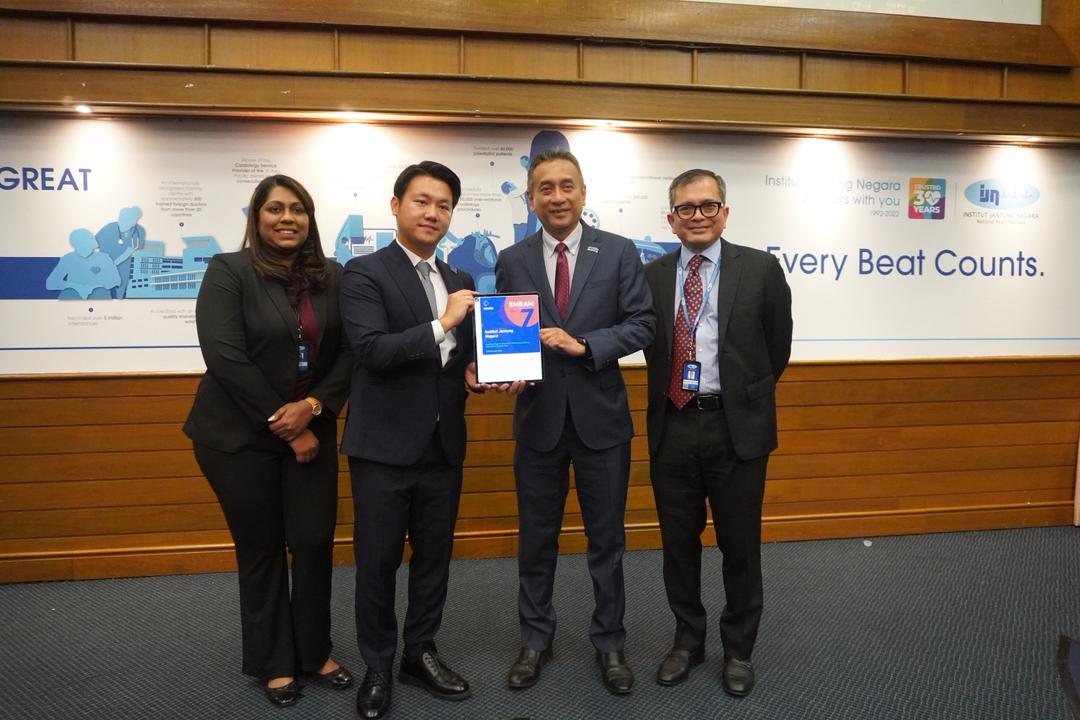
  • Stage 7 Success: IJN Sets New Standard in Digital Healthcare Excellence in Malaysia

    Stage 7 Success: IJN Sets New Standard in Digital Healthcare Excellence in Malaysia

    Institut Jantung Negara (IJN) continues to spearhead Malaysia’s digital healthcare transformation as the first hospital in the country to achieve Stage 7 validation under the Healthcare Information and Management Systems Society (HIMSS) Electronic Medical Record Adoption Model (EMRAM). EMRAM is a globally recognized eight-stage framework that evaluates how effectively hospitals adopt and integrate Electronic Medical Records (EMR) into clinical practice. The model assesses not only the implementation of digital systems but also the extent to which these systems are embedded in daily workflows to enhance patient safety, clinical documentation, medication management, clinical decision support, data analytics, and paperless operations.

    Stage 7 represents the highest level of digital maturity, reflecting a fully digital, paperless hospital environment supported by advanced data analytics and robust governance structures. Hospitals achieving this level demonstrate optimized clinical workflows, reduced medical errors, standardized processes, and data-driven decision-making. Achieving Stage 7 requires a rigorous international validation process conducted by HIMSS, including detailed electronic documentation reviews, live system demonstrations, workflow validation, and interviews with clinical teams to ensure digital systems are fully integrated and effectively utilized in patient care.

    Prof. Dato’ Sri Dr Mohamed Ezani Md Taib, Chief Executive Officer of IJN, said this milestone reflects the hospital’s long-standing commitment to digital excellence and patient safety. He emphasized that Stage 7 validation confirms that IJN’s digital systems are not only advanced but fully embedded into the delivery of cardiovascular care, empowering clinicians with real-time, accurate information and supporting safer, more efficient, and higher-quality outcomes for patients.

    With this achievement, IJN operates in a fully paperless environment where clinical documentation, medication management, and care coordination are seamlessly integrated across the continuum of care. Advanced analytics capabilities enable real-time clinical surveillance, performance monitoring, and continuous quality improvement. Prof. Dato’ Sri Dr Alwi Mohamed Yunus, Director of Health Informatics and Senior Consultant Cardiothoracic Surgeon at IJN, highlighted that reaching Stage 7 signifies that digital transformation is deeply embedded within the hospital’s clinical culture.

    He added that IJN teams are equipped with actionable insights at the point of care, allowing for continuous refinement of treatment pathways and improved patient outcomes. As one of a select group of hospitals worldwide to attain EMRAM Stage 7 status, IJN sets a new national benchmark in digital healthcare excellence and reinforces its position as a regional leader in technology-enabled cardiovascular care.