Tag: #MixedReality

  • PICO Reveals Next-Gen PICO OS 6 and Teases Flagship Project Swan with Early Access

    PICO Reveals Next-Gen PICO OS 6 and Teases Flagship Project Swan with Early Access

    PICO today officially unveiled its next-generation operating system, PICO OS 6, and offered an early preview of its upcoming flagship XR hardware, internally codenamed Project Swan. PICO OS 6 represents more than just an incremental update; it is a complete reconstruction of the spatial operating system. By redesigning its architecture from the ground up, it addresses persistent challenges in XR experiences, enabling seamless coexistence of 2D apps, 3D content, virtual environments, and physical reality. To complement the software, PICO plans to launch a new headset that combines upgraded hardware with this enhanced operating system, delivering a more integrated spatial computing experience.

    At the core of PICO OS 6 is the PICO Spatial Engine, a unified rendering architecture that fundamentally changes how graphics are processed. Unlike previous approaches where rendering was isolated at the app level, the Spatial Engine moves the pipeline to the OS level. This allows 2D apps, 3D objects, virtual environments, and physical reality to render simultaneously with high responsiveness, ensuring multiple 3D apps and 2D windows operate harmoniously and enabling virtual elements to blend naturally into the real world.

    Building on this foundation, PICO OS 6 introduces spatial multitasking, allowing users to collaborate on complex 3D models with colleagues represented as avatars while keeping browsers, notes, and other productivity tools active in floating windows above physical surfaces. The system adapts to multiple input methods, from gaze and pinch gestures to XR controllers for gaming, or even traditional keyboard and mouse setups for professional workflows. For the 2,600+ enterprise institutions PICO serves, this provides a stable, responsive digital workspace for professional spatial collaboration.

    Openness is a key principle of PICO OS 6. The operating system supports a wide variety of app ecosystems, including Spatial apps, OpenXR, WebXR, Android apps, Web apps, and PC VR streaming, treating all platforms as equal contributors. By lowering barriers for developers, PICO unites disparate ecosystems into a seamless user experience, fostering an inclusive environment for spatial computing.

    To empower developers, PICO has introduced a comprehensive suite of tools. The PICO Spatial SDK (Kotlin) and UI system simplify design with component-based APIs and unified runtime adaptation. The PICO Spatial Plugin for Android Studio and the new desktop-based PICO Emulator enable rapid development, coding, and testing without requiring a headset. Additionally, the open-source WebSpatial framework allows developers to use standard web technologies like HTML, CSS, and React to create install-free, cross-platform spatial apps that run across PICO OS, VisionOS, and AndroidXR. PICO OS 6 also deepens support for Unity and Unreal Engine, enabling mixed reality games to run alongside 2D and 3D apps, unlocking multitasking that allows gaming while simultaneously video chatting or browsing. All tools are available at developer.picoxr.com.

    While PICO OS 6 lays the software foundation, Project Swan represents the next step in hardware innovation. Project Swan introduces a new generation of MicroOLED displays with nearly 4000 PPI, offering a center sweet spot exceeding 45 pixels per degree for crisp text and professional workflows. The headset features a dual-chip design that manages complex mixed reality pipelines, including a custom XR chip that fuses data from multiple sensors to create realistic representations of physical spaces with just 12 milliseconds of latency. The flagship SoC doubles CPU and GPU performance compared to the XR2 Gen 2. Project Swan is scheduled for a global launch in late 2026.

    PICO has also launched the “PICO Global Early Access Program,” inviting experienced users to participate in a closed beta test for Project Swan and PICO OS 6. By gathering feedback from high-end device users, PICO aims to ensure seamless integration between the new OS and hardware. Interested participants can apply at picoxr.com.

    Founded in 2015, PICO is a leading innovator in all-in-one VR and MR technology, committed to connecting people, enriching lives, and unlocking possibilities. The company continues to build an integrated XR platform that empowers creators, developers, and businesses while inspiring global communities. For more information, visit PICO’s official website.

  • vivo Celebrates 30 Years with Launch of First Mixed Reality Headset and Advanced Digital Experiences

    vivo Celebrates 30 Years with Launch of First Mixed Reality Headset and Advanced Digital Experiences

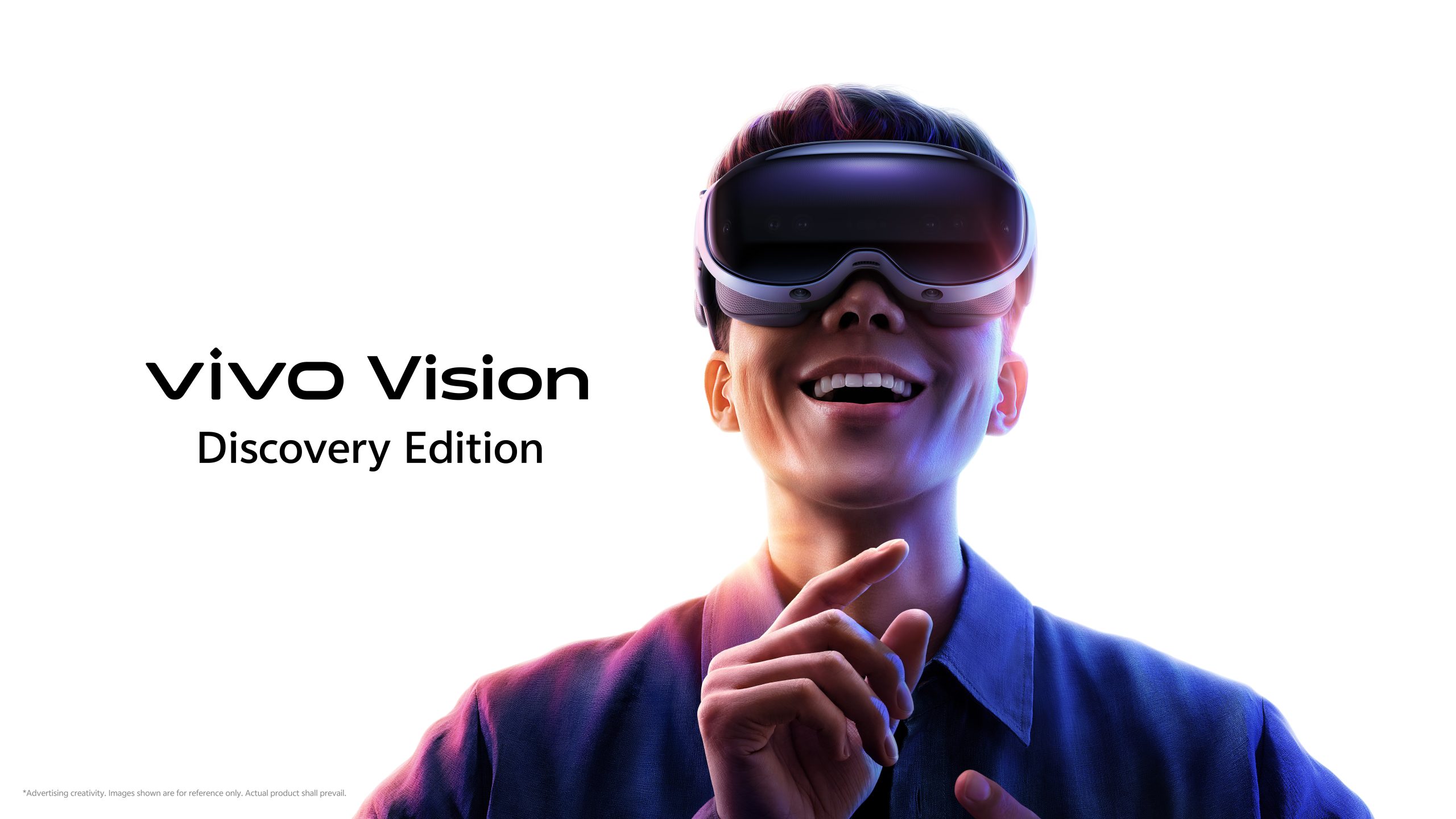
    vivo is celebrating its 30th anniversary by unveiling its first mixed reality headset, the vivo Vision Discovery Edition, at the vivo Vision Launch Event & Imaging Grand Ceremony. This launch represents a significant step in vivo’s journey into spatial computing and immersive technology, highlighting the company’s commitment to innovation and user-centric design.

    Drawing on its extensive experience in imaging, sensors, and display technologies, vivo has tackled key engineering challenges in mixed reality, particularly in perception, interaction, and computational performance. The vivo Vision Discovery Edition is the first MR device developed by a Chinese smartphone manufacturer, positioning vivo as the first company from China to operate in both the smartphone and MR product sectors.

    The vivo Vision Discovery Edition offers a lightweight and immersive mixed reality experience that has been four years in the making. Designed for daily use, the headset features an ergonomically optimized build weighing just 398 grams, with a height of 83 mm and a thickness of 40 mm, making it 26 percent smaller than the industry average.

    Extensive human factors research has informed the design, which includes four sizes of light seal and eight foam padding options to ensure comfort during extended wear or active use. Powered by the latest Qualcomm Snapdragon® XR2+ Gen 2 platform, the headset delivers up to 2.5 times GPU performance and eight times AI performance compared to the previous generation, enabling high-speed rendering and advanced interactive experiences in spatial computing.

    Running on OriginOS Vision, the vivo Vision Discovery Edition allows for natural and intuitive interactions across entertainment, gaming, and productivity scenarios. Users can enjoy immersive panoramic video, watch live sports or e-sports from multiple angles, or experience cinematic media on a virtual 120-foot theater screen anytime, anywhere.

    The headset introduces Malaysian consumers to the growing OriginOS Vision ecosystem, extending vivo’s technology beyond smartphones and providing a new portal into digital life. The vivo Vision Discovery Edition is now available for hands-on experiences at selected vivo Concept Stores nationwide, marking vivo’s latest innovation in delivering immersive, accessible, and high-performance mixed reality experiences to everyday users.

  • Transforming XR Workflows: PICO and Blender Foundation Announce Strategic Partnership

    Transforming XR Workflows: PICO and Blender Foundation Announce Strategic Partnership

    PICO, a leading XR company recognized for its independent innovation and research capabilities, has announced a collaboration with the Blender Foundation. As a contributor to Blender’s OpenXR development, PICO will work closely with Blender to advance immersive virtual reality (VR) and mixed reality (MR) experiences. The partnership aims to unlock new creative possibilities for artists and developers worldwide by introducing cutting-edge tools within the global 3D community.

    This collaboration marks a significant industry first, as PICO becomes the inaugural XR platform to partner with Blender in optimizing the 3D creation experience within virtual reality. Both organizations share a unified vision for transforming how 3D content is created. By integrating PICO’s expertise in XR hardware and software with Blender’s powerful open-source platform, the partnership will introduce next-generation solutions for immersive design and development.

    The partnership will empower creators with advanced XR tools that go beyond conventional input methods such as the mouse and keyboard. It is set to deliver more intuitive, immersive, and efficient workflows that improve creative productivity. At the same time, the collaboration will drive the broader adoption of the OpenXR standard, promoting compatibility and interoperability across platforms.

    According to Jessie Zhang, Head of Partnerships at PICO XR, the company is committed to supporting the Blender global open-source community and contributing to a thriving 3D creation ecosystem. She emphasized that this collaboration is not only about enhancing 3D tools, but also about building a space where every artist and developer can bring their immersive visions to life and connect with global audiences through OpenXR.

    Together, PICO and the Blender Foundation are shaping the future of spatial computing. By enabling artists and developers to explore new creative frontiers, this collaboration plays a key role in accelerating the evolution of the global 3D industry.