Pusat Perubatan Sunway, Bandar Sunway (SMC) mencatat sambutan menggalakkan bagi Karnival Gaya Hidup Sihat SunMed 2026 apabila lebih daripada 4,000 peserta hadir bagi mengambil langkah proaktif dalam meningkatkan kesihatan dan kesejahteraan secara menyeluruh. Karnival yang berlangsung dari Menara C hingga Menara D hospital itu dimeriahkan dengan pelbagai aktiviti interaktif dan informatif seperti bola sepak, refleks pantas, pickleball serta latihan keseimbangan. Pengunjung juga berpeluang mengunjungi stesen khas yang memberi tumpuan kepada kesedaran kesihatan pendengaran dan kanser, selain Healthy Living Marketplace yang menghimpunkan pelbagai jenama dalam bidang kesihatan, pemakanan, kecergasan dan gaya hidup, sekali gus mencerminkan komitmen hospital terhadap kesejahteraan holistik komuniti.
Menurut Pengarah Kanan Pembangunan Perniagaan dan Komunikasi Korporat SMC, Tan Mei Shin, pihaknya mengalu-alukan kehadiran pengunjung daripada pelbagai lapisan masyarakat ke karnival kesihatan tahunan tersebut. Beliau berkata acara itu bukan sahaja mencerminkan komitmen berterusan SMC terhadap kecemerlangan penjagaan kesihatan, malah turut menyatukan orang ramai untuk mengutamakan kesihatan dan kesejahteraan dalam suasana yang positif dan menyokong. Katanya lagi, amat menginspirasikan untuk melihat setiap individu saling menjaga diri serta antara satu sama lain, dengan matlamat bersama ke arah kehidupan yang lebih sihat dan berkualiti.
Karnival ini turut menyediakan pelbagai saringan kesihatan percuma yang dikendalikan oleh Pusat Kecemerlangan SMC, termasuk analisis komposisi badan, penilaian kesakitan, pemeriksaan tekanan darah postural dan saringan memori. SMC merupakan hospital kuaternari swasta terbesar di Malaysia dengan 28 Pusat Kecemerlangan serta lebih 300 perunding perubatan tetap merangkumi 80 kepakaran. Baru-baru ini, SMC telah disenaraikan sebagai hospital nombor satu di Malaysia dalam Hospital Terbaik Dunia 2026 oleh Newsweek bagi tahun kedua berturut-turut, selain turut menduduki tempat pertama di Malaysia dalam kategori Hospital Pintar Terbaik Dunia 2026 oleh penerbitan yang sama.
SMC juga merangkul anugerah Hospital Terbaik – Malaysia dan Inisiatif Hospital Pintar Terbaik – Malaysia di Healthcare Asia Awards 2026, sekali gus mengukuhkan kecemerlangannya dalam aspek keselamatan pesakit dan penjagaan berpusatkan pesakit. Selain itu, SMC merupakan hospital pertama di Malaysia yang menerima tiga akreditasi hospital utama, iaitu Akreditasi Suruhanjaya Bersama Antarabangsa dari Amerika Syarikat, Majlis Piawaian Penjagaan Kesihatan Australia Antarabangsa serta Persatuan Kualiti Kesihatan Malaysia.
Kejayaan penganjuran karnival ini turut disokong oleh penaja dan rakan kerjasama seperti BLACKMORES, Herbaland, Anytime Fitness, Sunway Lagoon, Gintell dan Julie’s. Kerjasama ini mencerminkan usaha kolektif dalam mempertingkatkan kesihatan komuniti serta membuka ruang kepada lebih banyak inisiatif berimpak tinggi pada masa hadapan demi kesejahteraan rakyat Malaysia.
The birth of a child is one of life’s purest joys, yet that joy can quickly turn into fear when a heart defect is discovered. Today, however, rapid advancements in paediatric cardiology in Malaysia have transformed such a diagnosis from a sentence of despair into a journey of hope.
“Congenital heart disease (CHD) affects about one in every 100 babies,” says Dr Lim Wooi Kok, Consultant Paediatrician and Paediatric Cardiologist at Sunway Medical Centre, Sunway City (SMC). “But with today’s imaging and interventional techniques, many children can now live to see adulthood compared to decades ago.”
Heart problems in children generally fall into two categories: congenital and acquired. Congenital conditions are present at birth and include acyanotic or “pink” heart defects as well as cyanotic “blue baby” conditions. These are often detected soon after birth, particularly when newborn pulse oximetry screening reveals oxygen levels below 95 percent, with diagnosis confirmed through cardiac ultrasound or echocardiography. More serious cyanotic conditions such as Tetralogy of Fallot, Transposition of the Great Arteries, and Pulmonary Atresia require early medical attention, especially when a baby’s lips and extremities turn blue.
Acquired heart conditions develop later in life and include Kawasaki disease, rheumatic valve disease, and arrhythmias. These conditions often present with symptoms such as prolonged fever, chest pain, or fainting spells. Heart murmurs may be detected during examination, and an echocardiogram is typically required to confirm the diagnosis.
Advancements in cardiac imaging now allow specialists to visualise the heart with greater clarity and precision. Dr Lim, who has extensive expertise in cardiac multimodality imaging, uses tools such as echocardiography, CT scans, and MRI to produce two-dimensional, three-dimensional, and cardiac strain images that are essential for assessing how well each segment of the heart muscle contracts. These technologies are particularly valuable for newborns, infants, children, teenagers, and even adults living with congenital heart disease. He notes that not all cardiologists are trained to perform cross-sectional imaging or interpret these complex images, but having this expertise enables a far more accurate understanding of a child’s heart.
The ability to visualise the heart in three dimensions also supports safer and more personalised treatment planning. Dr Lim explains that newer technologies, such as photo-counting CT imaging, provide detailed 3D images while carefully managing radiation exposure, which is especially important in paediatric cases. These advancements help clinicians visualise small structures more clearly and support safe, precise treatment decisions for children with heart conditions.
Many congenital heart conditions, including Atrial Septal Defect (ASD), Patent Ductus Arteriosus (PDA), and Ventricular Septal Defect (VSD), can now be treated through percutaneous interventions. This minimally invasive procedure is performed using a small catheter inserted through the groin, typically takes only a few hours, and allows the child to return home within a couple of days, compared to the longer recovery period associated with open-heart surgery. After treatment, maintaining good oral hygiene and following endocarditis prevention advice are essential for long-term heart protection.
Caring for a child with CHD requires patience and resilience. Many children experience feeding difficulties, slower growth, and frequent hospital visits. Dr Lim explains that even simple activities such as drinking milk can be physically demanding, as these children use significant energy just to breathe. Parents must carefully manage medications, attend regular follow-up appointments, and balance work and financial responsibilities, making it a lifelong journey.
Despite technological advancements, the emotional burden on families remains significant. “Parents often blame themselves. They wonder if it was something they ate or did during pregnancy. But most cases are genetic or occur by chance. The risk rises slightly to about two to three percent if a parent or sibling is affected,” says Dr Lim. He adds that emotional support from both healthcare providers and other parents is crucial, and families are continually reminded that they are not alone. With proper care, most children can go on to lead full and active lives.
This ongoing care fosters a lasting bond between patients and their cardiologists, ensuring continuous support into adulthood. “Children with congenital heart conditions need lifelong care. I still see some of my patients 20 years later, now adults, some even married. It’s a bond that lasts a lifetime,” he says. Dr Lim reassures parents not to panic, emphasising that with early diagnosis and proper care, many heart defects can be effectively treated. He also highlights the importance of prevention and follow-up, including regular screenings and vaccinations to protect children from infections.
Malaysia’s healthcare system has made significant progress in paediatric cardiology, including advancements in fetal echocardiography that allow heart defects to be detected even before birth. This enables parents to prepare early and allows doctors to plan for safe delivery and immediate intervention if needed. “Expectant mothers can now have their baby’s heart examined in the womb as early as 18 to 22 weeks, and proper care can be coordinated with the obstetrician if a defect is detected. This can make the difference between life and death,” Dr Lim explains.
Looking ahead, Dr Lim remains optimistic about the future of paediatric cardiology in Malaysia. With more specialists being trained in advanced imaging and interventional techniques, the outlook continues to improve. “The future is bright. We are seeing more specialists trained in advanced imaging and interventions, each bringing even more hope,” he says. Ultimately, he adds, at the heart of every breakthrough is a parent’s wish to see their child grow, laugh, and live life fully. Thanks to continuous advancements, that hope is increasingly becoming a reality for children across Malaysia.
Syncope, commonly referred to as fainting, accounts for approximately 1 to 3 percent of visits to emergency departments worldwide. While many of these cases are non-threatening, healthcare professionals from Sunway Medical Centre Velocity caution that cardiac-related syncope represents a far more serious category due to its association with potentially life-threatening heart conditions.
Cardiac syncope occurs when the heart fails to maintain adequate blood flow to the brain, often due to arrhythmias, structural abnormalities, or acute cardiovascular events. Unlike vasovagal fainting, which may be preceded by warning signs such as dizziness or nausea, cardiac syncope frequently happens without any prior symptoms. This lack of warning increases the risk of injury from sudden collapse and complicates early detection.
In emergency settings, rapid and structured evaluation is critical. Initial assessments typically include airway, breathing, and circulation checks, alongside vital signs monitoring and blood glucose testing. A 12-lead electrocardiogram (ECG) is a cornerstone investigation, allowing clinicians to detect abnormal heart rhythms or signs of cardiac stress. Depending on the clinical presentation, further diagnostic tools such as blood tests, imaging, and continuous cardiac monitoring may be required.
Dr Cyrus Lai Sin NanDr Lim Chiao Wen
From a cardiology standpoint, additional investigations like echocardiography and Holter monitoring provide deeper insights into heart structure and rhythm over time. Treatment strategies vary widely depending on the underlying cause, ranging from medication to advanced interventions such as pacemaker implantation, defibrillator therapy, or catheter ablation. In acute cases, such as heart attacks, urgent procedures like angioplasty may be necessary to restore blood flow.
Given the potential severity of cardiac syncope, risk stratification plays a crucial role in determining patient management. Individuals with abnormal findings or high-risk features often require hospital admission for further monitoring, while lower-risk cases may be managed on an outpatient basis with appropriate follow-up.
Sempena sambutan Hari Wanita Antarabangsa 2026, tema #GiveToGain menekankan amalan memberi yang mampu mencetuskan perubahan positif yang berkekalan — bukan sahaja untuk orang lain, malah untuk diri sendiri. Pada tahun 2025, jumlah penduduk Malaysia mencapai 34.2 juta orang, dengan lelaki melebihi wanita iaitu 18.0 juta berbanding 16.3 juta. Namun, di sebalik angka ini tersingkap satu realiti yang lebih mendalam. Di seluruh isi rumah di Malaysia dan rantau Asia Pasifik, wanita memikul pelbagai peranan serentak — sebagai individu profesional di tempat kerja, pembuat keputusan di rumah, dan tunjang emosi keluarga. Tanggungjawab yang bertindih ini sering menyebabkan waktu makan tergesa-gesa, tidur yang tidak mencukupi, serta tekanan yang meningkat, sekali gus menjejaskan kesihatan dan kesejahteraan diri.
Dr Vipada Sae-Lao, Ketua Pendidikan dan Latihan Pemakanan — Asia Pasifik, Herbalife, berkata, “Sebagai ahli Lembaga Penasihat Dietetik Herbalife, yang bekerja merentasi pelbagai budaya di Asia Pasifik, saya sering melihat satu hakikat yang sama: apabila wanita melabur dalam kesihatan diri, keluarga, tempat kerja, dan generasi akan datang turut memperoleh manfaat. Melalui kerjasama rapat dengan wanita yang mengimbangi pelbagai tanggungjawab, tema #GiveToGain menegaskan satu realiti jelas — menjaga kesihatan diri adalah antara cara paling berkesan untuk mengekalkan tenaga dan daya tahan bagi menyokong kerjaya serta keluarga.”
Dr. Vipada Sae-Lao, Nutrition Education and Training Lead – Asia Pacific, Herbalife.
Wanita di rantau ini turut berdepan dengan ketidakseimbangan pemakanan yang ketara. Data terkini menunjukkan peningkatan kadar obesiti dalam kalangan orang dewasa, manakala masalah bantut dalam kalangan kanak-kanak serta anemia dalam kalangan wanita usia reproduktif masih berleluasa. Menurut Tinjauan Kebangsaan Kesihatan dan Morbiditi (NHMS) 2024, kadar obesiti wanita adalah lebih tinggi iaitu 27.5% berbanding 19.3% lelaki. Beban berganda ini menjejaskan pelbagai aspek kehidupan — daripada kesihatan ibu dan anak hinggalah tahap tenaga dan daya tahan harian — sekali gus menekankan kepentingan wanita mengutamakan kesihatan dan kesejahteraan diri melalui pilihan bijak setiap hari.
Pemakanan seimbang merupakan asas dalam mencegah penyakit, mengekalkan tenaga, kestabilan metabolik, daya tahan imun, dan penuaan sihat sepanjang hayat. Kajian menunjukkan kekurangan mikronutrien — terutamanya zat besi, folat, dan vitamin B12 — lazim dalam kalangan wanita usia reproduktif di seluruh Asia, walaupun pengambilan kalori mencukupi. Hidrasi juga memainkan peranan penting, membantu tubuh menyerap nutrien dengan optimum dan mengekalkan fungsi harian. Amalan membawa air minuman rendah gula serta pengambilan kafein secara berhemah membantu memenuhi keperluan cecair harian sekitar dua liter dan menyokong kesihatan keseluruhan.
Sepanjang kitaran hidup wanita, keperluan pemakanan berkembang seiring perubahan hormon. Hanya kira-kira 33.5% wanita mencapai pengambilan zat besi yang disyorkan berbanding 55.8% lelaki. Semasa usia haid, kehilangan zat besi meningkatkan keperluan makanan kaya zat besi seperti daging tanpa lemak, lentil, kacang, sayur berdaun hijau, dan bijirin yang diperkaya. Menggabungkan makanan ini dengan buah dan sayur tinggi vitamin C meningkatkan penyerapan zat besi. Menopaus pula membawa perubahan hormon dan metabolik yang meningkatkan risiko penyakit kardiovaskular. Diet yang menyokong kesihatan jantung, termasuk buah-buahan, sayur-sayuran, bijirin penuh, dan makanan kaya Omega-3 seperti ikan berlemak, biji rami, kacang walnut, dan soya membantu mengekalkan tahap kolesterol dan trigliserida yang sihat. Serat larut daripada kacang, oat, epal, dan barli pula menyokong kawalan kolesterol serta rasa kenyang, membantu pengurusan berat badan.
Mulai usia 40-an, penurunan estrogen boleh mempercepatkan sarkopenia, iaitu kehilangan kekuatan otot berkaitan usia. Aktiviti fizikal yang mencukupi, termasuk latihan rintangan, serta pengambilan protein daripada sumber seperti daging tanpa lemak, ikan, kekacang, produk tenusu, tauhu, dan biji-bijian adalah penting untuk mengekalkan otot dan kekuatan fungsi tubuh. Suplemen boleh membantu menampung kekurangan pemakanan, tetapi penggunaannya perlu disesuaikan dengan keperluan individu dan dipandu oleh profesional.
Tidur yang mencukupi, aktiviti fizikal konsisten, dan pengurusan tekanan saling berkait rapat dan memainkan peranan penting dalam pengawalan berat badan, kesihatan kulit, dan kesejahteraan mental. Aktiviti sederhana selama 150 minit seminggu digabungkan latihan rintangan meningkatkan kesihatan kardiovaskular, mengekalkan ketumpatan otot dan tulang, serta memperbaiki kualiti tidur — amat penting selepas menopaus. Pengurangan pendedahan skrin dan rutin tidur konsisten mengukuhkan kesihatan metabolik, menjadikan tidur asas penting bagi penuaan sihat dan pengurusan berat badan berterusan.
When women prioritise their health, families thrive because healthy habits begin at home. #GiveToGain.
Pemakanan juga memberi kesan kepada kesejahteraan mental, meningkatkan daya tindak balas terhadap tekanan, kualiti tidur, dan kestabilan emosi. Diet kaya Omega-3, waktu makan konsisten, dan hidrasi mencukupi — sambil mengehadkan bahan rangsangan — menyokong keseimbangan emosi wanita yang menghadapi tekanan harian. Kajian menunjukkan wanita lebih stabil secara emosi apabila disokong rangkaian sosial kukuh, membantu mengurangkan stres, meningkatkan kesejahteraan, dan memberi impak positif kepada keluarga, komuniti, tempat kerja, dan ekonomi.
Secara ringkas, kesejahteraan jangka panjang dibentuk oleh pilihan harian yang dibuat sejak awal sebelum sebarang gejala membimbangkan muncul. Memberi kepada diri sendiri — melalui pemakanan konsisten dan penjagaan pencegahan — bukan tentang melakukan lebih banyak, tetapi melakukannya dengan lebih berhemah dan konsisten. Selamat Hari Wanita Antarabangsa. Semoga wanita Malaysia kekal kuat, sihat, dan bertenaga.
China Medical System Holdings Limited (CMS) has announced that its subsidiary, Dermavon Holdings Limited, has received New Drug Application (NDA) approval from the National Medical Products Administration (NMPA) of China for ruxolitinib phosphate cream for the treatment of non-segmental vitiligo. This approval grants Dermavon full regulatory authorisation to commercialise the product across Mainland China. The cream is a selective JAK1/JAK2 inhibitor and is currently the first and only drug approved by both the U.S. Food and Drug Administration (FDA) and the European Medicines Agency (EMA) for repigmentation in non-segmental vitiligo.
Vitiligo remains a significant unmet medical need in China, with an estimated 10.3 million patients, including approximately 8.2 million with the non-segmental form. As the first targeted treatment approved in China for this condition, the product represents a major milestone in addressing a long-standing gap in treatment. Clinical data from two overseas Phase III studies met their primary endpoints, with 29.9% of patients achieving F-VASI 75 after 24 weeks of treatment, significantly higher than placebo groups. Continued treatment for up to 52 weeks demonstrated sustained repigmentation, while real-world data in China confirmed consistent efficacy and continued improvement over time across both primary and secondary endpoints.
In addition, a Phase III clinical trial in China for ruxolitinib phosphate cream in the treatment of mild to moderate atopic dermatitis has shown positive results, and CMS is actively advancing the NDA process for this indication. The product is part of a collaboration and licensing agreement signed with Incyte in December 2022, granting CMS exclusive rights to develop, register and commercialise the product across Mainland China, Hong Kong, Macau, Taiwan and eleven Southeast Asian countries, along with non-exclusive manufacturing rights in the region. Relevant rights outside Mainland China have been sublicensed within the Group.
Since commencing independent operations in 2021, Dermavon has demonstrated strong growth momentum and established a leading position in China’s skin health sector. To further unlock its value and growth potential, CMS has proposed a spin-off and separate listing of Dermavon on the Main Board of the Hong Kong Stock Exchange. This development reflects CMS’s successful transition towards an innovation-driven, product-focused business model that supports sustainable growth.
To date, CMS has built a portfolio of approximately 40 innovative products, with six already approved for marketing in China. Supported by an optimised portfolio focused on innovative and exclusive drugs, the Group is well positioned to sustain its growth momentum. CMS will continue to strengthen its presence in key therapeutic areas including cardiocerebrovascular diseases, central nervous system, gastroenterology, metabolic diseases, ophthalmology and skin health, while expanding access to global innovative therapies. At the same time, the Group is advancing its internationalisation strategy, with Southeast Asia and the Middle East identified as important growth markets, leveraging its strengths in navigating complex regulatory and healthcare systems to deliver sustainable, long-term value creation.
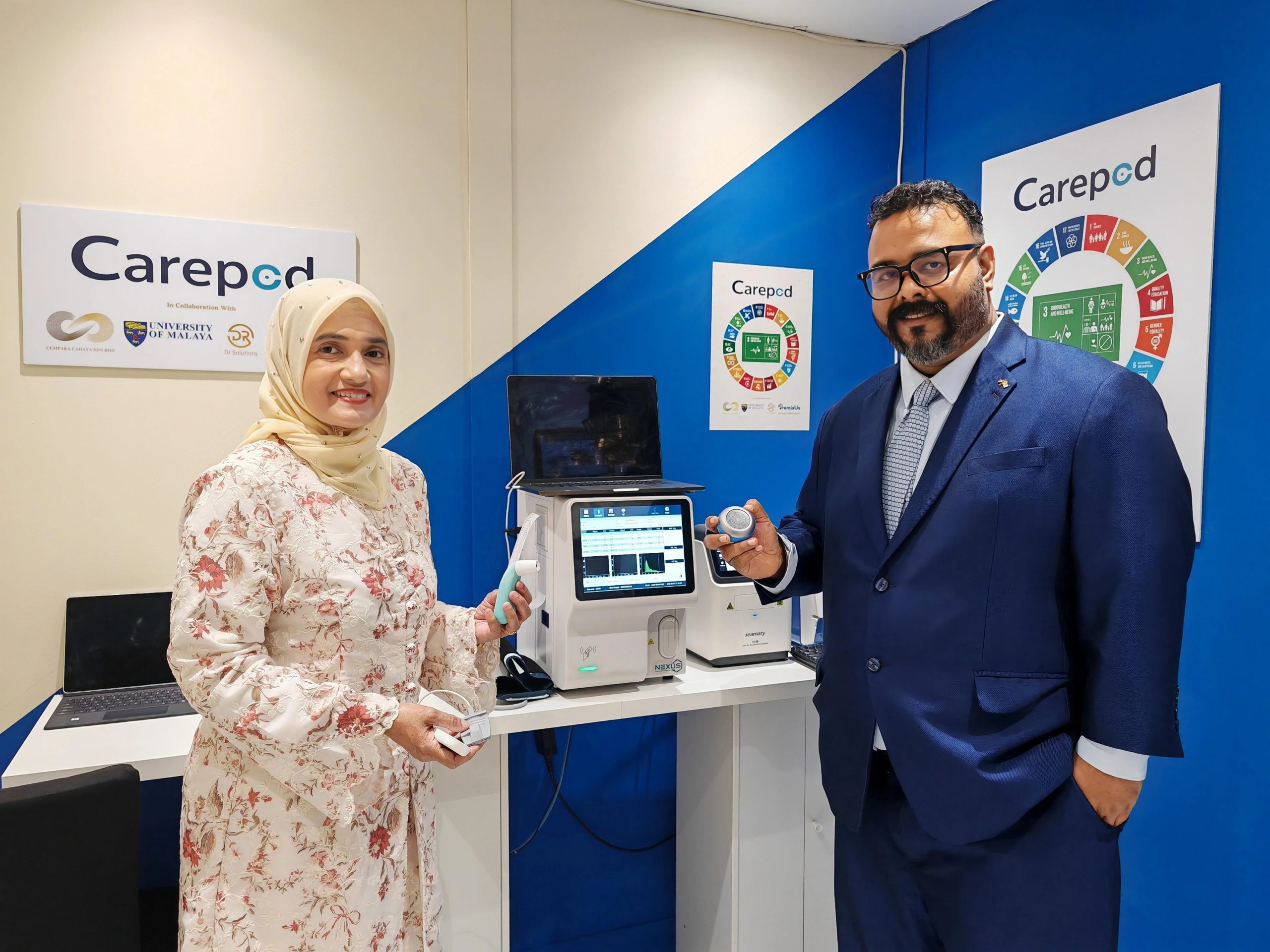
Cempaka Cahaya Sdn. Bhd. has launched CarePod, a next-generation AI-enabled healthcare kiosk aimed at improving preventive care and early disease detection in Malaysia. The launch, graced by Dato’ Dr. Suhaimi bin Ibrahim, Pengerusi KOBENA, underscored strong institutional and community support for transforming primary healthcare services through digital integration.
Developed by DR Solutions, CarePod is a fully integrated platform offering real-time vital sign monitoring, Point-of-Care Testing (including FBC, biochemistry panels, HbA1c), rapid screening for Malaria, Influenza, and Dengue, AI-assisted clinical workflows, secure teleconsultations, and digital follow-up pathways. This holistic model decentralizes healthcare delivery without compromising clinical governance, patient data security, or accountability.
CarePod’s digital infrastructure is strengthened by QuantumNexis Sdn. Bhd., ensuring scalable, enterprise-grade cloud services and compliance with international standards. The system also collaborates with University of Malaya to enable evidence-based outcomes, NCD risk profiling, and infectious disease analytics for continuous improvement.
Dr. Balachandran Krishnan, CEO of Cempaka Cahaya Sdn. Bhd., explained that CarePod marks a move from reactive treatment to proactive preventive care. “By integrating AI-driven diagnostics and teleconsultation into a secure ecosystem, CarePod reduces diagnostic delays, enables earlier intervention, and expands access to structured healthcare services—especially for semi-urban and rural populations,” he said. CarePod allows structured screening for hypertension, cardiovascular disease, diabetes, metabolic disorders, and respiratory compromise while providing rapid infectious disease testing.
This initiative represents a significant step in making preventive healthcare more accessible and efficient, leveraging AI, digital integration, and academic collaboration to improve health outcomes nationwide.