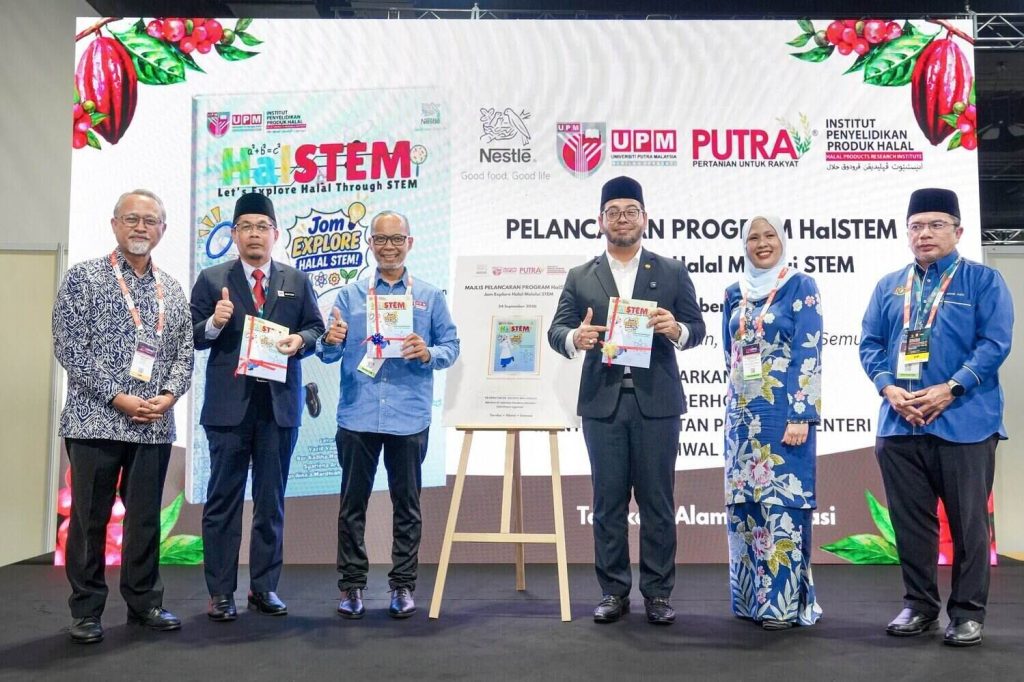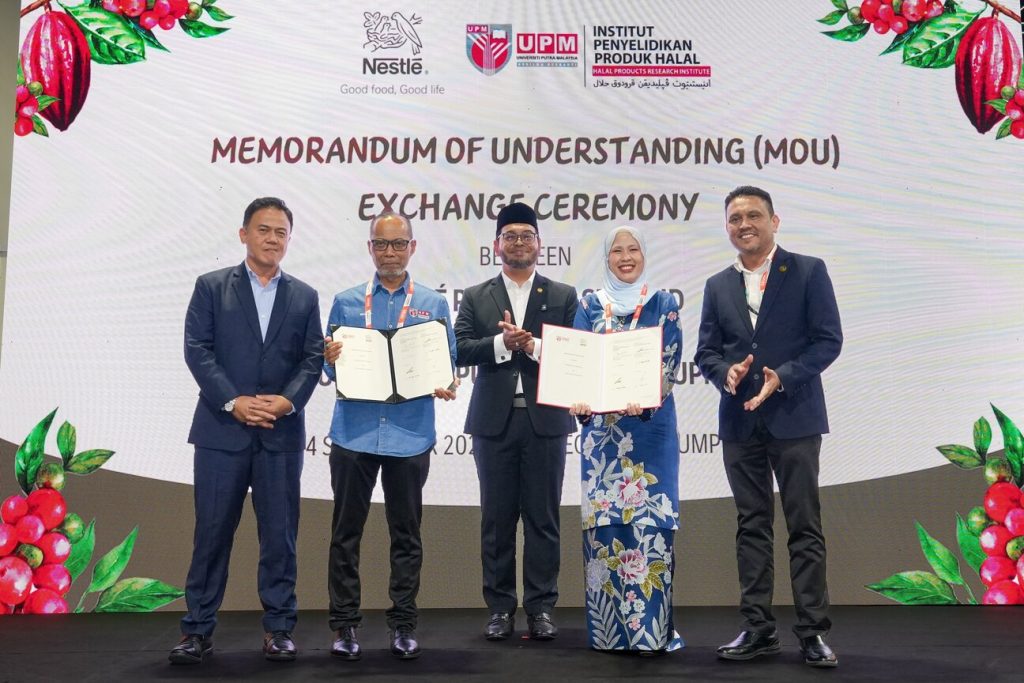
Malaysia’s ambition to sustain its competitive edge in the high-stakes global Halal market is receiving a major boost from the classroom up. Formalised through a strategic Memorandum of Understanding (MoU) exchanged at the Malaysia International Halal Showcase (MIHAS) 2026, Nestlé Malaysia has joined forces with Universiti Putra Malaysia’s Halal Products Research Institute (IPPH) to scale up the HalSTEM education initiative across local secondary schools.
The collaboration bridges a critical gap between academic theory and high-demand commercial skill sets. Serving as Nestlé’s global Halal Centre of Excellence, Nestlé Malaysia is integrating this rollout into its broader SYNERGY Halal framework alongside the Department of Islamic Development Malaysia (JAKIM)—an overarching initiative aimed at reinforcing consumer confidence, SME capability, and supply chain infrastructure.
Rather than confining lessons to textbooks, the HalSTEM programme engages students directly with the industrial science safeguarding modern food security. Participants gain hands-on exposure to laboratory-grade microscopy for authenticating ingredients, comparative analysis of plant versus animal compounds, nutritional formulation, and practical chemistry through sertu soap-making. Crucially, the syllabus introduces students to emerging technologies such as artificial intelligence-driven quality checks and advanced water filtration protocols.
As highlighted by leadership from both Nestlé Malaysia and UPM, instilling this technical literacy early demystifies the Halal sector while sparking genuine student enthusiasm for STEM pathways. Following initial pilots in Terengganu and Melaka, the joint rollout will expand across Peninsular Malaysia before launching nationwide—effectively building an agile, highly qualified talent pipeline ready to drive Malaysia’s multi-billion-dollar Halal economy forward.