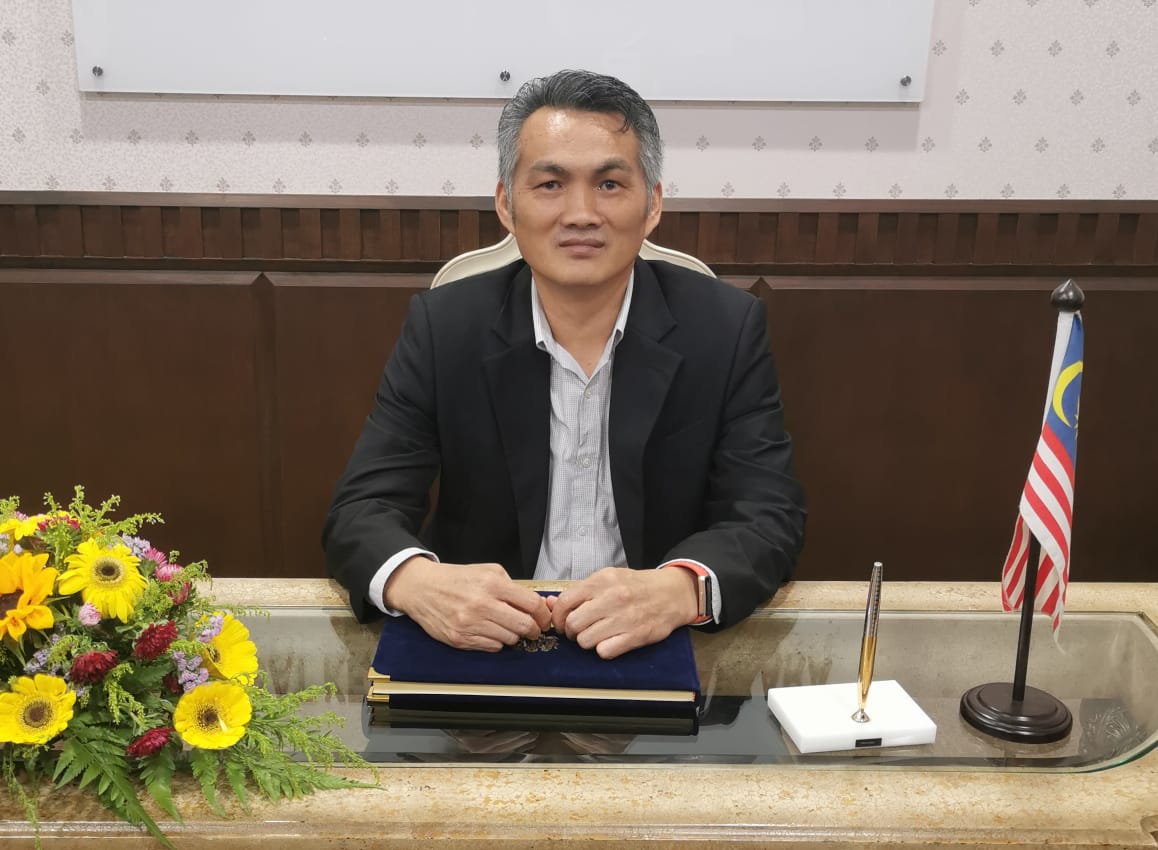
After spending 17 years working within Malaysia’s public sector, my firsthand on how government services have evolved to become more efficient and user-centric. However, I’ve always felt that there’s room for even greater improvement. With this mindset, I applied for the Cross Fertilisation Programme (CFP) under the Public Service Department, which offers government officers the opportunity to work in the private sector for a year. The goal is to gain new perspectives, learn best practices, and return with fresh ideas to improve public service.
While I wasn’t initially considering Huawei Technologies (Malaysia) as a potential placement, my fate had a different plan. When I received the opportunity to work with Huawei in November 2023, I was excited yet uncertain about what to expect. Little did I know, this unexpected partnership would become a pivotal chapter in my career, offering me valuable insights into digital innovation, leadership, and the power of technology in transforming not just businesses, but public administration as well.
Upon joining Huawei Malaysia as an Environmental, Social, and Governance (ESG) Manager, I was initially under the impression that the company’s business was primarily focused on consumer products like smartphones, wearables, and tablets. This was a common misconception I shared with many others.
To my surprise, I discovered that the consumer segment only accounts for a small fraction of Huawei’s business—about 5% of its total revenue. The company’s major revenue streams are in areas such as Carrier Network Business, Cloud and AI, Enterprise Solutions, and Digital Power. This shift in understanding made me realise just how impactful Huawei’s infrastructure and technology solutions are, particularly in telecommunications and digital connectivity. In fact, Huawei has been integral to Malaysia’s telecommunications infrastructure since 2001, providing over 95% of the country’s connectivity.
One of the aspects of Huawei’s corporate culture that struck me the most was its unwavering commitment to learning and development. In a rapidly changing tech world, the company places a strong emphasis on upskilling and reskilling its employees, with all staff expected to dedicate at least one hour per week to learning. This philosophy goes beyond just enhancing technical skills—it reflects Huawei’s belief that a culture of continuous learning is key to staying ahead of the curve and fostering a mindset of innovation across all levels of the organisation.
The iLearning platform, which Huawei uses for employee training, was something I quickly became familiar with during my time at the company. Even I, coming from a government background, was encouraged to engage with the platform, take exams, and upskill in various areas. This focus on personal and professional development is something that I believe could be beneficial for the public sector as well, where learning and growth are often seen as secondary to daily operations.
One of the most transformative parts of my journey at Huawei was participating in the Digital Leadership Excellence (DLE) Programme in Shenzhen, China, in 2024. This programme was inspired by a call from Prime Minister Dato’ Seri Anwar bin Ibrahim during his speech at the Malaysia ICT Summit hosted by Huawei. The Prime Minister highlighted the need for Malaysian leaders to embrace digital transformation to take the country into the future.
The visit to Huawei’s headquarters in Shenzhen was an eye-opening experience. I was able to see firsthand how the company’s cutting-edge research and development are driving global digital infrastructure and how their focus on innovation is not just about technology but about creating solutions that address real-world problems. It was clear that Huawei’s vision to create a “fully connected, intelligent world” is at the heart of everything they do, from 5G networks to AI solutions.
What stood out most during my time at Huawei was their customer-first mentality, which shapes everything from product development to corporate strategy. This approach has led Huawei to become a leader in digital technology, and it’s a mindset I believe the public sector can learn from. By focusing more on citizen-centric services and embracing technological innovation, governments can improve the way they serve the public and drive greater societal impact.
I have come to realise that the public sector could benefit immensely from adopting private sector best practices—particularly in terms of digital transformation, agility, and employee empowerment. Much like how Huawei has succeeded in becoming a global tech giant through a strong corporate culture and a commitment to innovation, government institutions can build a more efficient and effective public service by fostering a culture of learning, collaboration, and tech-enabled solutions.
As I wrap up my time with Huawei Malaysia, I feel an overwhelming sense of gratitude. The experience has been an eye-opening journey that has equipped me with new tools and perspectives to bring back to the public service sector. I’m deeply thankful to Vice President Mr. Oliver Liu and the team at the Business Environment Department for their unwavering mentorship and guidance throughout my tenure.
Huawei’s commitment to continuous learning, innovation, and customer satisfaction has left a lasting impression on me, and I am eager to bring these lessons back to my role in the government. As I move forward in my career, I am excited to explore how public and private sectors can work together more closely, leveraging the power of digital transformation to create a more innovative, efficient, and citizen-focused public service.
My journey with Huawei has shown me that the future of governance lies in the empowerment of people, the integration of technology, and a relentless drive to innovate. These are the principles that I hope will guide my work in improving public administration for a brighter and more connected future.